 Village Green Technologies, LLC
Super Smartphone Technology
Village Green Technologies believes that there is room for a new market segment for high-end smartphones, called "super smartphones," providing even greater display capabilities than today's computationally powerful smartphones.
The challenge is that smartphones must remain small in order to continue to play their critical role as the alerting device of choice. The smartphone is the one computing device that a person will have with them at all times, and which they use for most of their alerting requirements. In addition, it is important for smartphones to have long battery life, to minimize the likelihood that the user must recharge their smartphone at an inconvenient time.
Both of these factors make it very difficult to provide larger screens, even for super smartphones.
Village Green Technologies believes that the best solution for these challenges is the optionally deployable second screen that could be built-in to a smartphone. Such a super smartphone would look somewhat like a lower-end smartphone when the optional second screen is not deployed, but when the user needed the second screen, he or she could deploy the screen, powering it up and making it visible simply by clicking a button, or else sliding or unfolding a part of their super smartphone to expose the second screen.
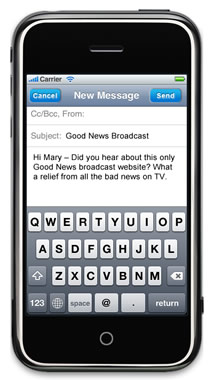 |
One Becomes Two --> | 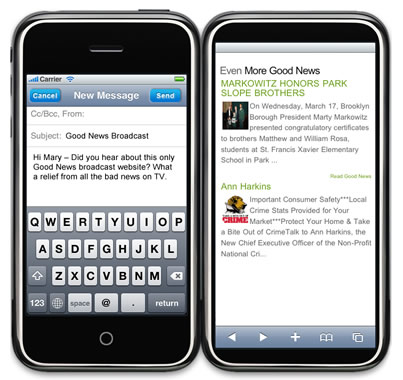 |
Why do people need this feature? To create content of professional quality directly on their smartphones!
When creating informal communications or documents, the smartphone as it exists today is very good. When creating content (emails, slideshows, or memos) of professional quality, however, it is important to be able to see information from another application while you are creating new content of professional quality. The optionally deployable second screen gives this ability, making it unnecessary for professionals to wait until they get back to their laptop computers to create this content.
Challenge
There are significant technical challenges that stand in the way of adding a second optional display to modern smartphones. There is the challenge of making robust reliable hardware that will deploy the second screen, which is a significant hardware challenge. In addition, however, there is a significant software challenge. Modern smartphones all exist with complex software development environments and large amounts of software written by third-party developers and distributed as smartphone apps. It is imperative that a smartphone with a second optional display be able to utilize apps written for a single-screen smartphone. It is also imperative that all of the apps that professional users may use to obtain reference documents all be able to run on the second screen, even though they were written for a single screen smartphone.
It is not very hard to modify the GUI system of a smartphone to support this kind of optional display in this way, but the software developers that create this software usually work for completely different companies than the companies that would create the robust and reliable hardware to optionally deploy the second screen. This has made this new feature surprisingly difficult to add to a smartphone, since two separate large companies must join together to support the technology needed for this feature.